
"coffee seed development"
4000 article(s) found

Cultivation techniques of Coffee Tree Seedling Propagation and Establishment of Coffee Garden
(1) Seedling propagation Coffee seedling propagation can be divided into seed propagation and asexual reproduction. 1. Seed propagation (1) seed collection, seed washing and seed storage during the full ripening period of coffee (the full ripening period of medium-grain coffee in Hainan Island is from February to March, and that of small seed is from September to November). The fully ripe fruits are picked from strong and high-yielding mother trees to make seeds. After the fruit is harvested, peel and wash the seeds immediately. The method is to remove the fruit.
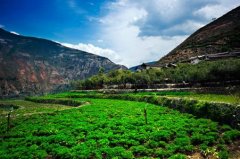
Brief introduction of Yunnan small Coffee Huaguoshan Coffee Flavor, taste and aroma characteristics
Dehong: it is known as the hometown of coffee in China. As of 2011, a total of 120900 mu of coffee has been developed and planted in the state, accounting for 30% of the total coffee planting area in the country. In the next 3 years, the planting area of coffee in Dehong Prefecture will reach 200000 mu. Coffee plants in Dehong Prefecture are all above 1000 meters above sea level, of which 30, 000 mu are planted in mountains above 1600 meters above sea level, plus coffee is grown in Dehong Prefecture.

Introduction of elegant Tippica Coffee Manor Flavor and delicious varieties of Coffee beans
Small-grain coffee is suitable for growing in the mountains at an altitude of 800 to 1800 meters. If the altitude is too high, it will taste sour, and if it is too low, it will taste bitter. Small grains of coffee are mostly planted in dry and hot valleys about 1100 meters above sea level, so they are moderately sour, rich and mellow. There is a unique environment suitable for the growth of small seed coffee in many areas of Yunnan, and the quality of small seed coffee is excellent. The planting area is mainly distributed in the

Introduction to the producing area of Yunnan small Coffee Huaguoshan Coffee Bean Flavor description method
The flavor description of Yunnan small-grain coffee beans the characteristics of the producing area introduce that the growth and development of coffee is closely related to the climatic and environmental conditions. In the areas where the wind is strong, the temperature is high, the light is strong, and the soil is easy to dry, the axillary buds of plant branches tend to differentiate into flower buds, and the growth of branches is small, which is easy to cause premature senescence. Therefore, it is necessary to choose a place with quiet wind, high humidity and short light as a garden. Small grains of coffee are

This is an Arabica coffee bean?! What are Polysperma multi-seed seven-seed coffee beans?
When you first saw the cover picture and the title, did you think you were joking? Isn't there only 1-2 coffee beans for one coffee fruit? That's what all the previous articles said! Yes Indeed. According to a normal coffee fruit, a coffee fruit contains two coffee beans, which are

Coffee goes through all over the world
From the 17th century to the early 18th century, the habit of drinking coffee spread from Europe, from the west to the whole of Europe, and eastward to India and present-day Indonesia. As for coffee as a growing crop, the Islamists brought the seeds from Yemen to India, and then Europe introduced the seeds to Ceylon and Java. Bring seeds from Java to Amsterdam
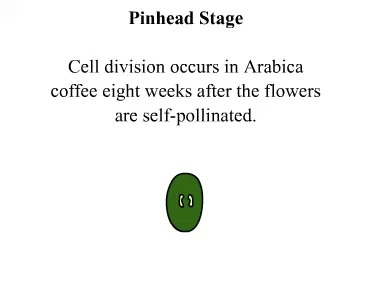
Detailed analysis of the specific changes in the ripening process of coffee beans by diagrams of the growth and ripening process of coffee beans
It takes about 8-9 months (32-36 weeks) for coffee to blossom to ripen. Today, Chongqing Beresta Coffee training School is here to share with friends the whole process of coffee bean growth and ripening. [tiny stage] (the first 8 weeks) Arabica coffee begins to divide eight weeks after flowering and fertilization. [site grabbing stage] (8-12 weeks) vesicle cavity (with ovary)

The backbone of coffee trees.
Coffee is a shallow root crop, and the plants propagated with seeds have conical roots. Root system refers to the general name of root. The root morphological distribution and depth of shade varieties / soil conditions and agricultural technical measures are different. From the point of view of varieties, the roots of small / medium grain species are shallower, while those of large grain species are deeper. Under normal circumstances, there is a thick and short taproot and many well-developed lateral roots. Yunnan small-grain coffee has a 4-year-old fruit.

Planting situation of fine coffee beans in Baoshan, Huaguo Mountain, Yunnan Province
The main producing area of small-grain coffee is suitable to grow in the mountains at an altitude of 8001800 meters. If the altitude is too high, it will taste sour, and if it is too low, it will taste bitter. Small grains of coffee are mostly planted in dry and hot valleys about 1100 meters above sea level, so they are moderately sour, rich and mellow. There is a unique environment suitable for the growth of small seed coffee in many areas of Yunnan, and the quality of small seed coffee is excellent. Main planting area
The backbone of the coffee tree
Coffee is a shallow root crop, and the plants propagated with seeds have conical roots. Root system refers to the general name of root. The root morphological distribution and depth of shade varieties / soil conditions and agricultural technical measures are different. From the point of view of varieties, the roots of small / medium grain species are shallower, while those of large grain species are deeper. Under normal circumstances, there is a thick and short taproot and many well-developed lateral roots. Yunnan small-grain coffee has a 4-year-old fruit.
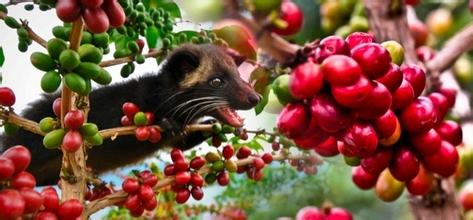
What is the growing environment of coffee beans? What conditions must be met to grow coffee beans?
Coffee is native to tropical Africa. The origin of the small seed species is the tropical plateau of Ethiopia. It is between 900 and 1800 meters above sea level with an average annual temperature of 19. C; the mid-grain species is native to the tropical rain forest of the Congo, with an average annual temperature of 2126 at an altitude of less than 900 meters. C . Their origins are shaded or semi-shaded forests and river valleys, so the formation of coffee requires calm wind, cool and wet.

Structure diagram of coffee bean structure text roaster
Coffee bean structure text roaster structure diagram selection of coffee mother tree on the fully mature, normal shape, full, the same size, with two seeds of fruit. To remove the peel of the selected fruit, you must be careful to prevent damage to the seeds and affect the germination rate, and then put the peeled seeds in a ventilated and cool place to dry. The seed shell can be whitened and the seeds can not be exposed.

The requirements of coffee on the ecological environment in which grain coffee requires a slightly higher temperature.
Small seed coffee is native to the lower part of the Ethiopian rainforest in northern Africa. The temperature is relatively low, with an average annual temperature of 20 degrees. The origin of medium-grain coffee is near the equator. Therefore, small seed coffee has stronger cold tolerance and wider adaptability than medium grain coffee. Medium-grain coffee requires a slightly higher temperature. First, the requirement for temperature should be based on the natural conditions of Yunnan, and the suitable planting area of coffee should be selected.
The basic knowledge of coffee tree planting
Coffee is a shallow root crop, and the plants propagated with seeds have conical roots. Root system refers to the general name of root. The root morphological distribution and depth of shade varieties / soil conditions and agricultural technical measures are different. From the point of view of varieties, the roots of small / medium grain species are shallower, while those of large grain species are deeper. Under normal circumstances, there is a thick and short taproot and many well-developed lateral roots. Yunnan small-grain coffee has a 4-year-old fruit.
Yunnan small seed Coffee attracts domestic and Foreign buyers
On the 213 National Highway from Xishuangbanna to Pu'er, when cars drill out of a tunnel, small coffee trees can be seen everywhere. The coffee harvest season is coming up. You see, this land is planted in the sun, there are no shade trees, and there will be insect pests in the future. Wen Liubin, an employee of Nestl é's Yunnan Coffee Company, told the Economic Information Daily (Weibo) that he had been on this road a year after graduating from college.

Coffee Dictionary-- A detailed introduction to the shape features of common coffee beans, good and bad types of coffee beans
Coffee cherry: the fruit of a coffee tree, named because its rind is bright red and its shape is very similar to cherries. Round beans: in the process of coffee fruit growth, one of a pair of seeds develops very well, and the other seed is eaten so that the coffee beans that are supposed to be oval become round. Elephant beans: larger than ordinary coffee beans, the taste is usually insipid. Coffee belt (Coffe)
The requirements of Coffee on Ecological Environment
Small seed coffee is native to the lower part of the Ethiopian rainforest in northern Africa. The temperature is relatively low, with an average annual temperature of 20 degrees. The origin of medium-grain coffee is near the equator. Therefore, small seed coffee has stronger cold tolerance and wider adaptability than medium grain coffee. Medium-grain coffee requires a slightly higher temperature. First, the requirement for temperature should be based on the natural conditions of Yunnan, and the suitable planting area of coffee should be selected.
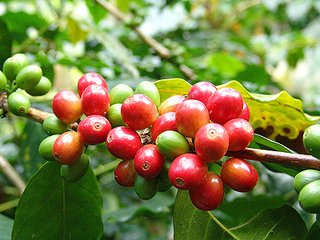
Coffee cultivation and cultivation Coffee cultivation techniques and techniques Introduction to the process of coffee green beans cultivation
(a) seedling propagation coffee seedling propagation can be divided into seed propagation and asexual propagation. 1. Seed propagation (1) Seed collection, seed washing and seed storage In the mature period of coffee (the mature period of medium seed coffee in Hainan Island is 2~3 months, and the mature period of small seed coffee is 9~11 months), fully mature fruits are picked from healthy and high-yield mother trees to make seeds. After the fruits are picked, peeling and seed washing are carried out immediately.
Boutique Coffee basic knowledge the backbone of coffee trees
Coffee is a shallow root crop, and the plants propagated with seeds have conical roots. Root system refers to the general name of root. The root morphological distribution and depth of shade varieties / soil conditions and agricultural technical measures are different. From the point of view of varieties, the roots of small / medium grain species are shallower, while those of large grain species are deeper. Under normal circumstances, there is a thick and short taproot and many well-developed lateral roots. Yunnan small-grain coffee has a 4-year-old fruit.

The sun? Washing? Honey treatment? What exactly are you talking about when you are talking about the handling of coffee beans?
The exchange of professional baristas please follow the coffee workshop (Wechat official account cafe_style) 1. Coffee fruit can be divided into six layers from outside to inside, namely, outer skin, pulp, gum, parchment, silver and seeds. The difference of different treatment methods lies in the different methods of removing the outer coating of beans; 2, dry treatment 3, no layer is removed, the whole beans are directly dried and exposed to sunlight.